There’s a rhythm to the sound of water running through the Valle dei Mulini — the Valley of the Mills. It echoes softly between stone walls and lemon groves, carrying the same cadence it had eight centuries ago, when the first papermakers of Amalfi began their quiet craft. The sea was close enough to taste in the air, yet the true life of this town pulsed inland, where streams turned wheels, and wheels pressed pulp into history.
Long before paper became ordinary, Amalfi gave it soul.
A Legacy Born of Water and Trade
By the twelfth century, Amalfi was already a maritime republic — a crossroad of merchants, manuscripts, and ideas. Traders returning from the Arab world brought not only silk and spices, but a secret from the East: the art of making paper.The valley’s fast, clean waters proved ideal for the process. Mill by mill, Amalfi’s craftsmen refined the method, replacing linen and hemp with cotton, and learning how to harness the waterfalls’ force to beat the fibers into a soft, fibrous pulp. The result was a paper unlike any other in Europe — bright, resilient, with a deckled edge that still whispers of the hands that lifted it from water.For centuries, this paper carried royal decrees, illuminated texts, and the correspondence of poets. Even after printing presses changed the world, Amalfi’s mills continued — small, steady, faithful to the flow of water and tradition.
The Craft of Slowness
To understand the Amalfi paper is to understand patience. Each sheet begins not in a factory, but in a vat of water and cotton pulp — a suspension so delicate that its proportions are felt more than measured. An artisan lowers a wooden mold, framed with fine mesh, into the mixture. The motion is deliberate, circular, like stirring memory. With each lift, the water drains away, leaving behind a thin layer of fiber that will soon become paper.
This is the moment where precision yields to intuition. The craftsman tilts the mold, coaxing an even spread across the screen. The edges — irregular and feathered — form naturally, a signature no machine could ever reproduce. These deckled borders are not imperfections; they are the language of authenticity. The wet sheet is then pressed between felt and hung to dry in the open air, where the scent of the sea and the valley mingle. What remains is more than paper — it is time, stilled into texture.
A Material with Memory
Hold a sheet of true Amalfi paper to the light, and you can see its watermark: an emblem of identity embedded during formation, visible only when illuminated. It’s a mark of origin, yes, but also of integrity — the quiet confidence of something made to endure. Its composition, 100% cotton, gives it both softness and strength. Artists prize it for its ability to absorb ink without bleeding.
Calligraphers cherish its subtle tooth. Writers — those who prefer the deliberate slowness of pen and page — find in it a material that resists haste.
Every stroke leaves a faint impression, a physical trace of thought. Writing on Amalfi paper becomes an act of participation; the page responds, ever so slightly, to your hand.
From Waterfall to Word
Few crafts remain so entirely dependent on nature. The same streams that once powered Amalfi’s ancient mills still feed today’s papermakers. The process is unchanged, not out of nostalgia, but necessity — because no machine has yet matched the precision of the human hand when guided by water and patience. In the quiet workshops of the valley, the past doesn’t linger as history; it breathes as routine. A wooden wheel turns. Pulp stirs. Sheets are lifted, pressed, and hung one by one. What emerges, after days of drying and smoothing, is something that feels both fragile and eternal — a paradox at the heart of true craftsmanship.
The Modern Revival
Amalfi’s papermaking nearly vanished in the 20th century, as industrial production and cheaper materials swept across Europe. Yet a handful of families refused to let the valley fall silent. They preserved the old tools, repaired the wheels, and kept the knowledge alive — a lineage of artisanship passed not through textbooks, but through touch. Today, these surviving mills create paper in small quantities for artists, collectors, and writers who understand that not all progress lies in acceleration. Their work is not about efficiency, but endurance. To hold such paper is to hold a continuity that connects centuries — a whisper of the same water that shaped it long before our time.
The Beauty of (Hand)Writing Slowly
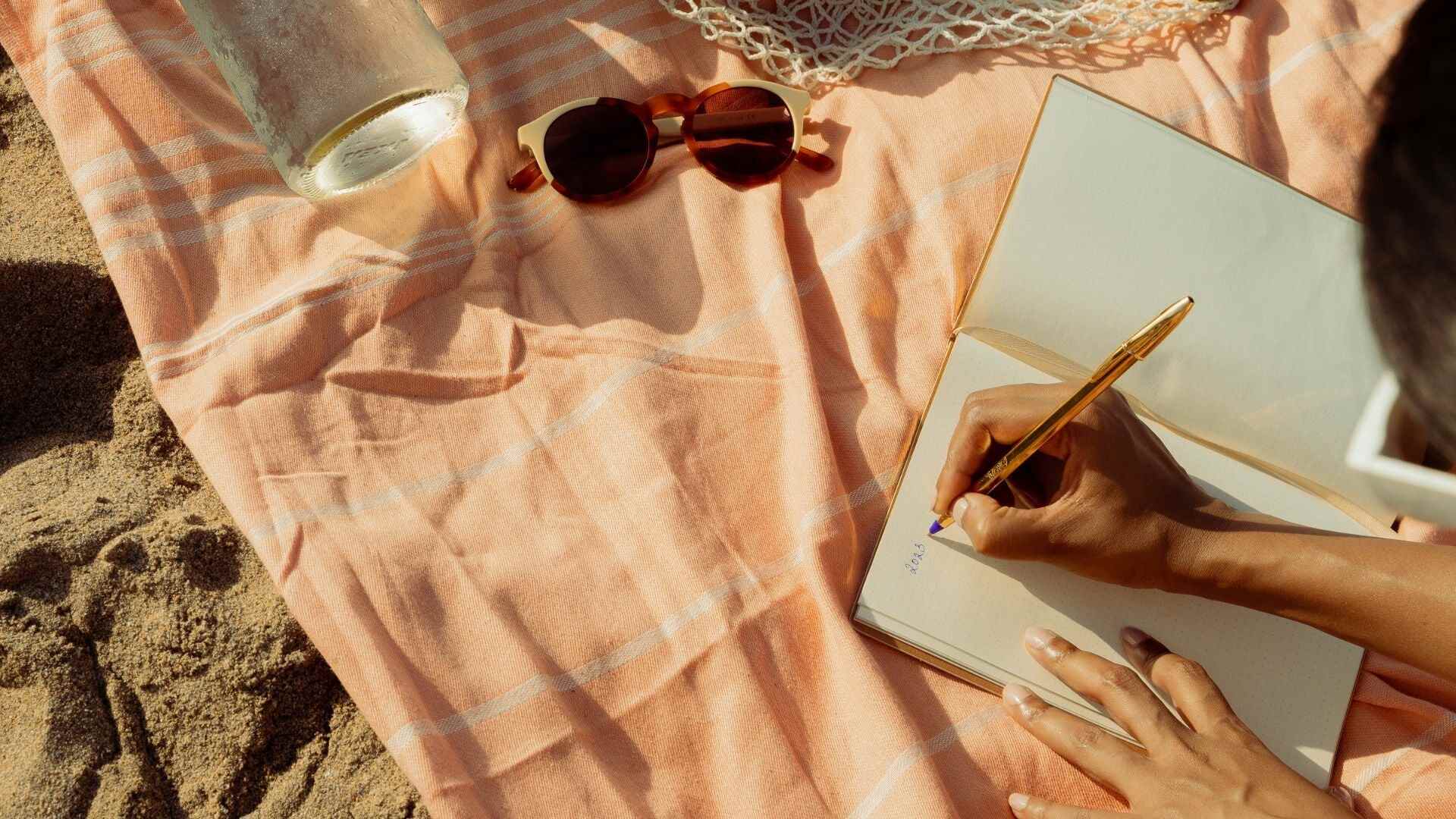
When you write on Amalfi paper, the act itself changes. Your hand moves differently — slower, more intentional. You begin to sense the rhythm that guided the papermakers: water flowing, wheels turning, sheets drying in sunlight.
Every mark you make joins that rhythm. And in doing so, your words don’t simply rest on the page; they belong to it. It’s easy to overlook the material beneath our writing — to see paper as neutral. But Amalfi paper refuses invisibility. Its presence insists that what you write should matter, that thought deserves the dignity of texture. To write upon it is to remember that craft, when done by hand, is a form of devotion — one that transforms water into word.